Devpost
Participate in our public hackathons
Devpost for Teams
Access your company's private hackathons
Grow your developer ecosystem and promote your platform
Drive innovation, collaboration, and retention within your organization
By use case
Blog
Insights into hackathon planning and participation
Customer stories
Inspiration from peers and other industry leaders
Planning guides
Best practices for planning online and in-person hackathons
Webinars & events
Upcoming events and on-demand recordings
Help desk
Common questions and support documentation
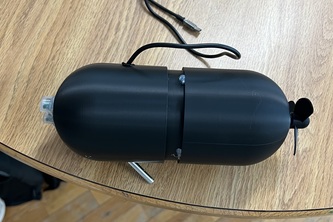
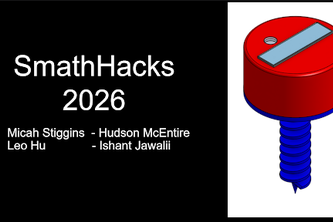
the G.R.A.P.P.L.E.R (Grasping robotic autonomous prospecting platform for low depth exploration and retrieval) is an advanced robotic claw designed to maneuver around obstacles for sample retrieval
Sub sea debris is a game designed for Smath Hacks 2026 to raise awareness about how pollution affects aquatic ecosystems. The player, with help from the EPA, explores the depths to save the ecosystem.
ReefGuard turns buoys into digital sentinels. Our sensor-equipped buoy detects vessels using underwater acoustics and wireless signals, alerting authorities when boats enter restricted habitats.
Shell Shield Turtle Monitor aims to protect and promote biodiversity in our oceans by monitoring sea turtle nests with a multitude of sensors to help environmentalists protect sea turtle populations.
2,000+ US water bodies were unsafe last summer. Most people had no idea. We built BloomWatch a free, AI-powered algal bloom detection for any ZIP code. Real data. Real action. Built in 36 hrs.
L.I.O.N. uses machine learning to identify invasive species and biological indicators, giving researchers the tools to protect coral reef ecosystems before it's too late.
This program provides a simulation for how oil would spill from a point source with different variables in nature such as wind velocity, temperature of the water, and the spread rate.
ReefGuard is an interactive map of the world’s coral reefs. Explore reefs, see pollution threats, save favorites to a digital collection, and learn how you can help protect these ecosystems.
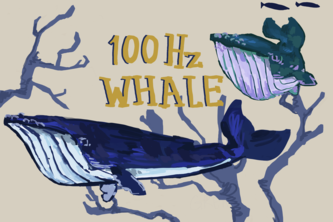
Seasickness affects 10% of people in a marine setting, which can lead to human accidents like oil spills. 100Hz Whale is a therapeutic interactive game to minimize seasickness and protect oceans.
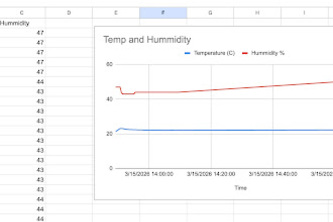
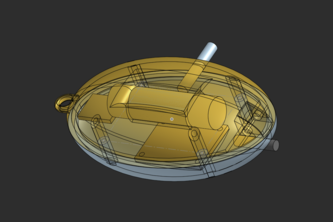
NEMO is an IoT-enabled, fully autonomous submarine that collects environmental data—temperature, turbidity, and pH—and streams to a web dashboard. The dashboard provides a color-mapped visualization.
Instant Zero Shot AI detecting oil spills, plastic, and coral bleaching with semantic vision to protect our oceans
What if the ocean could talk back? ECHO is an AI hydrophone network that identifies endangered whale species by sound, maps their location in real-time, and enforces no-fish zones to protect them.
Water pollution kills 4 million annually, with 2 billion people using contaminated water. OceanPulse curbs this crisis with live data for scientists to use for immediate water quality improvements.
Invasive Species Identification Educational Game
Enter your coordinates to find your nearest ocean
Sea Dive: Text Adventure is a text-based diving game where a user decides to ascend, descend, or wait. Poor decisions cause failure, and every depth band contains organisms and links to learn more.
Closing the Accountability Gap in Coastal Light Pollution; You can't fine a pixel
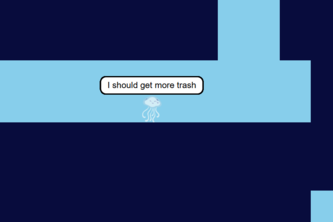
Meet Jelly, the jellyfish! Guide jelly through a platform world to collect trash, fight monsters, and learn more about how to clean the world!
CO-BRA is a predictive model that can help to mitigate the effects of coral bleaching by detecting them early.
Affordable, feasible, machine-learning-powered sea turtle nest detection with a tiny beach-roving robot.
Procedural music from ocean data
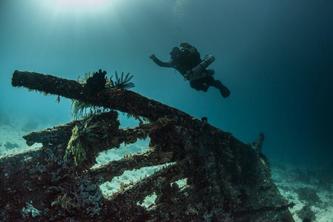
Mapping the Outer Banks using machine learning on nautical chart data to locate thousands of undiscovered shipwrecks may lie along the Outer Banks coast.
Ever wondered at what depth certain objects will be crushed? How far down you can swim? Well now you can see with CRUSHSIM!
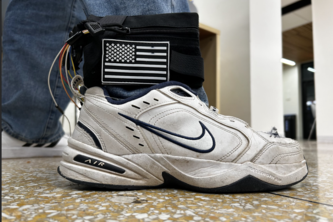
Anchor detects fatigue-driven gait changes in maritime workers in real-time, alerting them via wearable IoT to prevent slips and falls while mapping high-risk zones across the vessel.
25 – 48 of 57